Best Before Date: The Website Shelf Life
When I look back at the codebases and architecture we shipped in our first year of business, one undeniable truth stands out: software ages, whether you want it to or not.
Eamon McKiernan

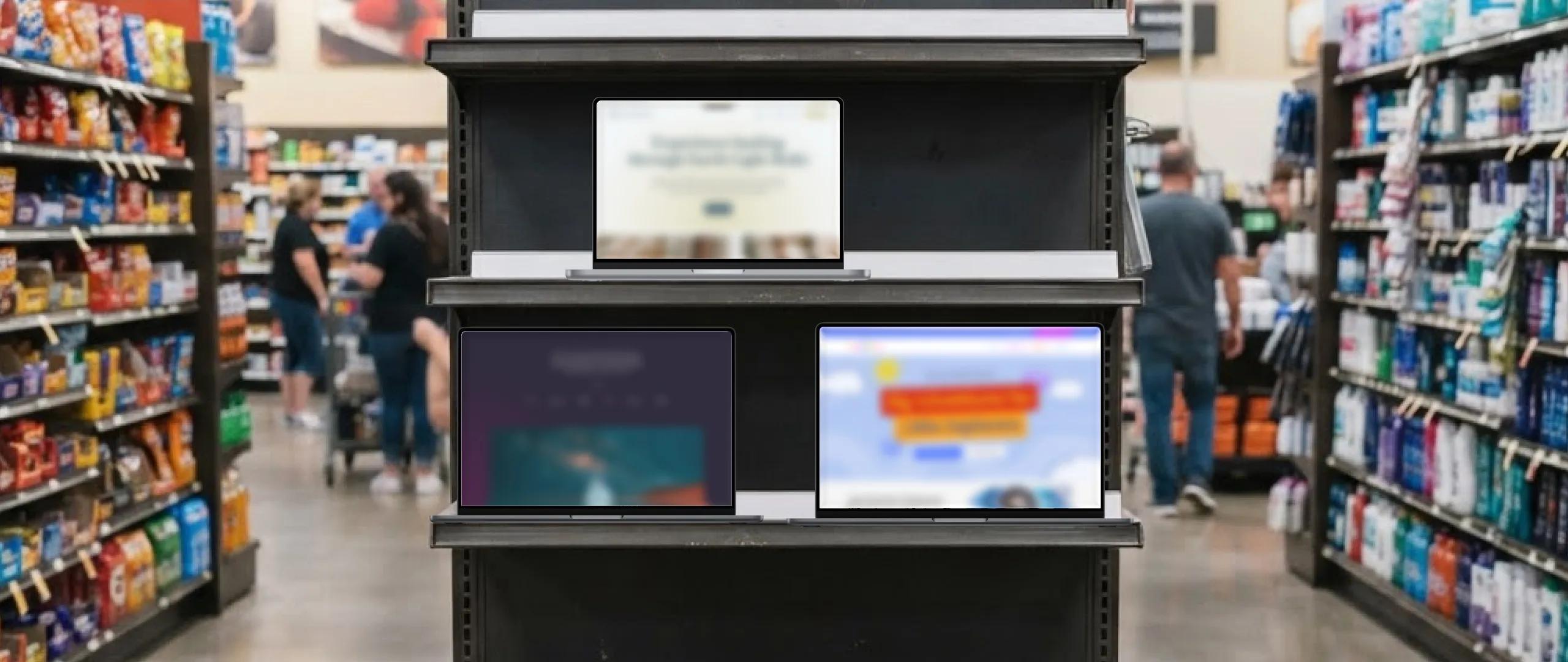
With the explosion of generative AI tools over the last few years, the prevailing myth in website creation is that planning is an obsolete bottleneck. The thinking goes: “Why spend weeks designing when an AI agent can generate a functional coded page from a text prompt in seconds?” I see this trap catching small businesses and startup founders constantly. They want to skip straight past the drawing board and head directly into development. But rushing into code without a dedicated design phase isn't moving fast—it's just building technical debt at record speed.
The design phase doesn’t exist to slow you down. It exists to protect your budget, clarify your strategy, and give you a digital playground where changes cost nothing but a few minutes of pixel pushing. Here is an honest breakdown of why the design phase remains the most critical step in the Mintyy pipeline.
It’s easy to look at modern development stacks and assume that building has become cheap enough to skip blueprinting. But there is a massive difference between an AI generating a generic component and a developer engineering a unified, high-performance digital ecosystem. At Mintyy, we treat the design phase as the vital strategic filter that separates random ideas from an ironclad deployment roadmap.
When we map out a project in Figma, every visual element is fluid. If you decide that a primary call-to-action belongs on the left side of a layout instead of the right, or if we need to completely overhaul a customer onboarding flow, it takes seconds. We swap a master component, adjust a auto-layout configuration, and the entire prototype updates globally. There are no databases to break, no broken dependencies, and no server errors. Figma is a zero-risk sandbox built for experimentation.
Once a site leaves the design phase and enters the development pipeline, the visual elements turn into concrete architecture. A simple tweak to a functional component at this stage means modifying the underlying code template, updating data schemas within the CMS, testing semantic HTML rendering for accessibility compliance, and running the code through our local test environments. What took two minutes in Figma can now easily eat up hours of engineering focus just to maintain code integrity.
Beyond the technical advantages, the design phase is where we build alignment. Before a single dollar is spent on hosting or development, a high-fidelity Figma prototype gives you a tangible, interactive preview of your future website. You can click the links, view the responsive layouts, and experience the user journey exactly as your customers will. It removes the guesswork, ensuring that when we finally hit the green light for development, we are both aiming at the exact same target.
Skipping the design phase to save time is the ultimate false economy. It values the appearance of progress over actual engineering efficiency. By investing the time up front to stress-test your strategy and refine your user experience inside Figma, you ensure that every single hour of development capital is spent building a pristine, production-ready engine.
At Mintyy, we don't start coding until the blueprint is perfect. That’s how we protect your budget, guarantee lightning-fast load times, and deliver award-finalist quality every single time.

We acknowledge the Whadjuk Nyoongar people as the Traditional Owners of the lands and waters where Perth city is situated today, and pay our respect to Elders past and present.
When I look back at the codebases and architecture we shipped in our first year of business, one undeniable truth stands out: software ages, whether you want it to or not.
In 2026, malicious hackers aren't sitting at keyboards manually probing your website - they are deploying automated AI tools that scan millions of websites per minute, analysing code structures and probing for newly disclosed vulnerabilities the moment a security patch is released.
Over the years - through my time at an award-winning creative agency and the founding of Mintyy - my approach to building for the web has undergone a complete shift.